The easiest saree poses are the ones that show the drape moving: a slow walk, a half-turn over the shoulder, holding the pallu out at an angle, or sitting with the pleats fanned in front. Below are 40 saree poses with short how-to steps, grouped into standing, sitting, candid, close-up, selfie, occasion and couple poses. Further down you’ll find which poses suit which drape style, what to do with your hands, and phone camera settings that make a saree photoshoot look polished without a professional.
Before You Pose: Five Quick Fixes
- Pin the pleats and the shoulder. One safety pin at the waist pleats and one on the shoulder lets you move freely without the drape slipping between shots.
- Set the pallu length. For most standing poses, a pallu that falls to the back of the knee looks balanced. Longer pallus suit twirls and flying-pallu shots.
- Fan the pleats. Run your fingers down the pleats right before the photo so they fall straight.
- Stand slightly turned. Facing the camera square-on makes any outfit look flat. A quarter-turn adds shape.
- Relax your shoulders. Drop them, then breathe out just before the click.
Standing Saree Poses
- The quarter turn. Turn your body about 45 degrees from the camera, put weight on your back foot and turn your face towards the lens. The simplest pose that flatters almost everyone.
- Pallu held out. Hold the end of the pallu with one hand and stretch it out to the side at shoulder height so the border and motifs show clearly.
- Over-the-shoulder look. Stand with your back half-turned to the camera and look back over your shoulder. Great for showing a blouse back design.
- Hand on the waist. Rest one hand lightly at the waist, elbow pointing back, not out. It creates a gap between arm and body, which looks more defined.
- Leaning on a wall or pillar. Lean one shoulder against the surface and cross the outer leg over. Relaxed and easy for beginners.
- Framed by a doorway. Stand inside an old door, arch or window frame. The frame does half the work.
- Hands clasped in front. Hold your hands loosely together just below the waist with bangles visible. Works for temple and puja photos.
- Pallu over the head. Lift the pallu lightly over your head like a veil, holding one edge near your chin. Popular for weddings and Karwa Chauth.
Sitting Saree Poses
- Steps with pleats fanned. Sit on a step, knees together and slightly to one side, and spread the pleats in front like a fan.
- Side sit on the floor. Sit with legs folded to one side and the pallu draped across your lap. Ideal for heavy silk borders.
- Chair with crossed ankles. Sit near the front of the chair, back straight, ankles crossed and turned to one side.
- Knees up, arms around. On a low step, bring knees up and wrap your arms around them, chin resting on top. Gives a softer, candid feel.
- Jhoola or swing. Sit on a swing holding one rope, with the pallu hanging down. Perfect for Teej and garden shoots.
- Window seat. Sit sideways on a ledge or window seat and look outside. Side light from the window flatters both face and fabric.
Candid and Movement Poses
- Slow walk. Walk slowly towards the camera, looking down or to the side. Ask for burst mode and pick the frame where your front foot lands.
- The twirl. Spin gently with arms slightly out. Chiffon and georgette move best; heavy silks need a bigger turn.
- Flying pallu. Let the pallu loose and have a friend toss it up from behind, or use a breezy spot. Shoot in burst mode.
- Laughing mid-moment. Have someone tell you a joke and shoot while you react. Real laughter photographs better than a posed smile.
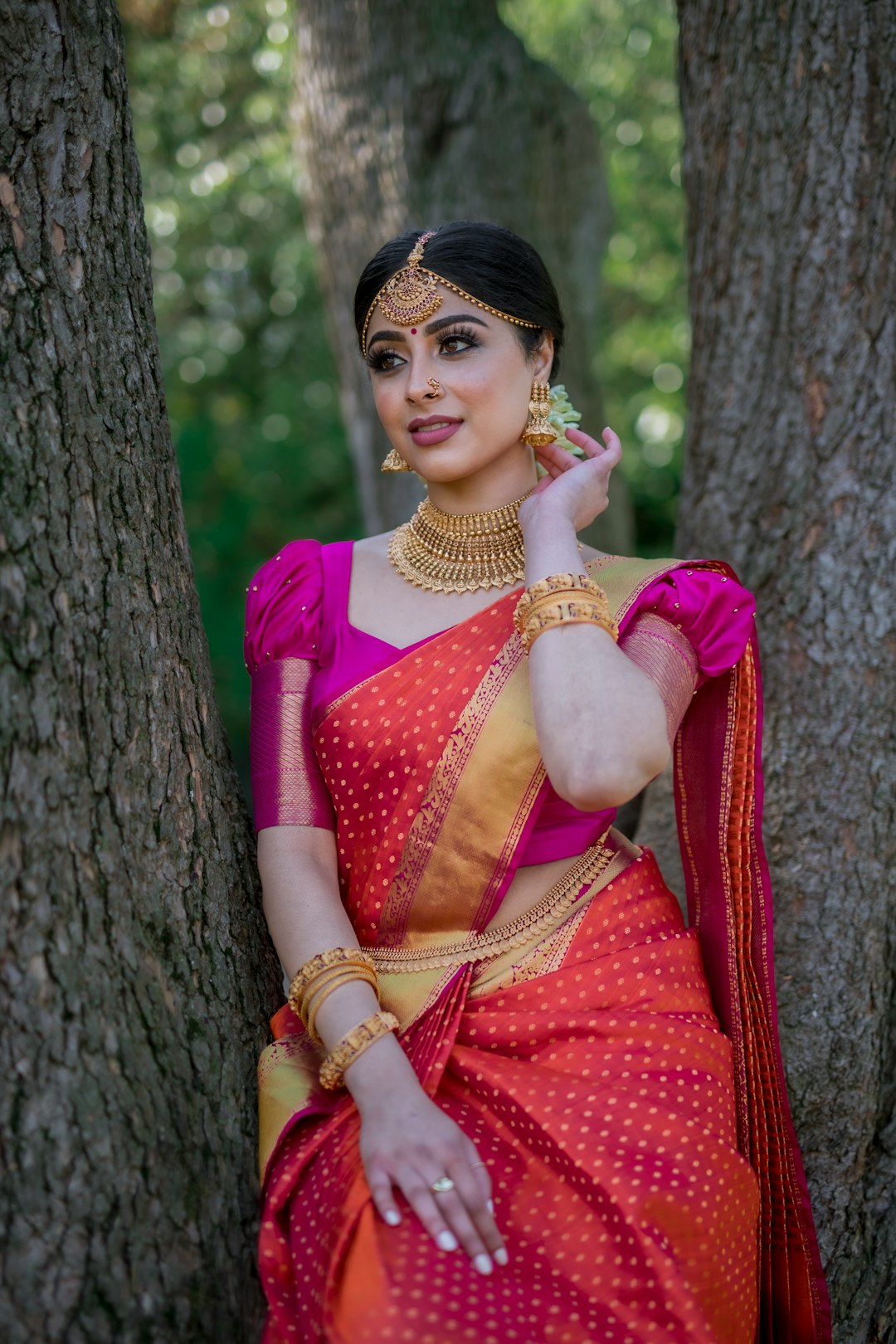
- Fixing the earring. Raise one hand to your earring and look down slightly. Shows jewellery, bangles and the blouse sleeve in one frame.
- Adjusting the pleats. Look down and hold the pleats as if adjusting them. A natural getting-ready shot.
Need words for these shots? Our candid captions are written for them.
Close-Up and Detail Shots
- Hands on the border. Rest both hands on the zari border so mehendi, rings and bangles sit against the weave.
- Pallu across the face. Hold a sheer pallu so it softly covers half your face. Works with organza, net and chiffon.
- Jhumka profile. Turn fully side-on and tuck hair behind the ear to show earrings and the blouse neckline.
- Back of the blouse. Turn away with hair moved to one side to show the blouse back and the pallu fall.
- Feet and pleats. Shoot from knee height downwards with payal, alta or juttis peeking out under the pleats.
Selfie and Mirror Poses
- High-angle selfie. Hold the phone slightly above eye level and tilt your chin down a touch. Keep the pallu on the far shoulder in frame.
- Mirror side-stand. Stand side-on to a full-length mirror, phone at chest height, so the pleats and pallu both show.
- Mirror with pallu pulled forward. Bring the pallu over your arm towards the mirror so the border fills the lower frame.
- Getting-ready mirror shot. Pin a flower or put on a bindi while the phone on a stand records. Pick a frame from the video.
For lines that match, see our mirror selfie captions.
Poses by Occasion
Weddings
- Walking with sisters or friends. Walk side by side in a line, everyone looking at each other rather than the camera.
- Hands with mehendi up close. Hold both hands together in front of the face, palms out, eyes peeking over.
- Seated by the mandap. Sit near the decor with marigolds or lights behind you, slightly out of focus.
Festivals and Puja
- Holding a diya. Cup a lit diya in both hands near your chest, face lit from below. Best shot at dusk.
- At the rangoli. Kneel beside a rangoli or pookalam and look down at it as if adding the final colour.
- Offering flowers. Hold a small thali or flowers with both hands, eyes lowered. Simple and respectful for temple photos.
Couple and Group Poses
- Back to back. Stand back to back with your partner or friend, both looking over the near shoulder at the camera.
- Forehead touch. For couples, foreheads together with eyes closed. Keep the pallu visible on the outside.
- Walking hand in hand. Walk away from the camera and look back together.
- Matching pallus. For sisters or friends in similar sarees, hold your pallus out towards each other so the borders line up.
- Seated group on steps. Stagger heights on a staircase so no one blocks anyone else’s drape.
For couple post captions, see our couple traditional captions.
Best Poses for Each Drape Style
Different drapes show off different parts of the saree, so the pose should follow the drape.
| Drape | What to show | Poses that work |
|---|---|---|
| Nivi (common style) | Pleats and pallu border | Quarter turn, pallu held out, slow walk |
| Bengali (Atpoure) | Pallu with keys over the shoulder, wide red border | Over-the-shoulder look, side sit on the floor |
| Nauvari (Maharashtrian) | Dhoti-style legs and nath | Standing with one foot forward, profile close-up |
| Gujarati seedha pallu | Pallu spread across the front | Front-facing stand, hands clasped below the pallu |
| Kodava (Coorg) | Pleats at the back, pallu over the right shoulder | Back three-quarter view, walking away and looking back |
Want to try a new drape first? Our guide on how to drape sarees in different styles walks through them.
What to Do With Your Hands
- Give each hand a job: hold the pallu, touch an earring, rest on the waist or hold a prop.
- Keep fingers soft and slightly apart rather than flat or clenched.
- Show the side of the hand to the camera, not the full palm or the back of the hand.
- Avoid both arms pressed flat against your sides, which hides the waistline and the drape.
Phone Camera Settings for Saree Photos
- Use 2x or portrait mode for full-length shots. Wide 1x lenses stretch the edges of the frame, so step back and zoom slightly instead.
- Shoot from waist or chest height. Shooting from above shortens the body; shooting from very low exaggerates it.
- Turn on gridlines. Place yourself on a vertical third rather than dead centre.
- Use burst mode for movement. Twirls, walks and flying-pallu shots need many frames to get one sharp one.
- Lock focus and exposure. Tap and hold on the face, then lower exposure slightly for white, gold or light pastel sarees.
- Best light: the hour after sunrise and before sunset, or open shade on a bright day.
Common Saree Pose Mistakes
- Standing straight on to the camera with weight on both feet.
- A tight grip on the pallu that bunches the border.
- Busy backgrounds that clash with a printed saree.
- Cutting the frame at the ankles or knees in a full-length shot.
- Forgetting to check the pleats between poses.
A Simple Shot List to Share With Your Photographer
- Full-length quarter turn
- Pallu held out to the side
- Back view showing blouse and pallu fall
- Seated with pleats fanned
- Slow walk in burst mode
- Twirl or flying pallu
- Jhumka and profile close-up
- Hands on the border with bangles and rings
- Candid laugh
- One group or family photo
Captions for Your Saree Photos
Once you have the photos, pick a caption that matches the mood. Browse our saree captions for Instagram, or colour and language sets such as green saree captions, white saree captions and saree captions in Kannada.
FAQ
What is the easiest pose in a saree?
The quarter turn: stand about 45 degrees away from the camera, put your weight on your back foot and turn your face to the lens. It works for every body type and every drape.
How do I pose in a saree if I feel awkward?
Choose movement-based poses like a slow walk, adjusting the pleats or fixing an earring. Having something to do with your hands takes away most of the stiffness.
Which saree poses make you look taller?
Shoot from waist height or slightly lower, keep a slight angle to the camera, point the front foot towards the lens and keep the pleats long and straight. Avoid shots taken from above.
What are good poses for a saree photoshoot at home?
Try the window seat, mirror side-stand, sitting on stairs with pleats fanned, and a getting-ready shot at the dressing table. Use daylight from a window instead of overhead lights.
How can I make my pallu look good in photos?
Pin it at the shoulder, keep it long enough to reach the back of the knee, and hold the very end of it when you stretch it out so the full border shows.

