Electrical systems heavily depend on the quality and performance of insulation materials. The selection of the right insulation affects safety, but also the duration of the system’s life, energy efficiency, and its overall performance.
Among the most popular insulation types used in cables are PVC, PTFE, and fiberglass. However, each material by itself offers a unique set of characteristics that make it suitable for particular applications only.
Identifying differences among these insulation materials is a great help for engineers, manufacturers, and buyers to choose the right cable. So, we will take a close look at the physical features, pros, cons, and typical uses of PVC, PTFE, and fiberglass insulated cables.
Electrical Insulation Materials Explained
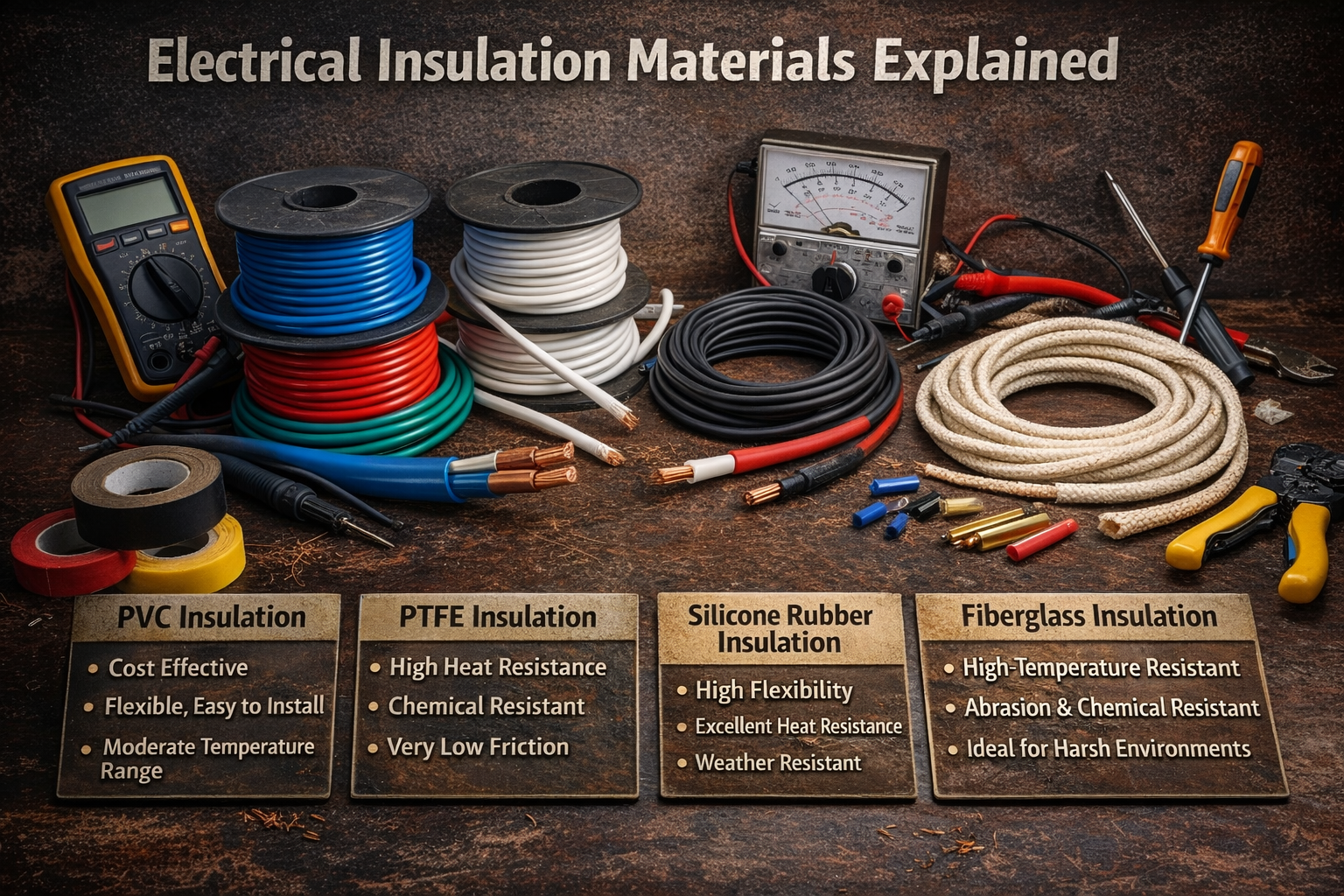
Insulation materials for electrical purposes are components aimed at stopping electric currents from flowing outside the conductor. They are used to safeguard cables against harsh weather conditions, avoid connection between conductors, and guarantee safety of end users.
The role of a dependable Electrical Insulation Materials Manufacturer is indeed very crucial, as they are responsible for delivering materials that comply with the industry standards and offer high quality. Such materials have to resist various factors like heat, water, chemicals, and mechanical forces while still providing excellent insulation performance.
Introduction to PVC Insulated Cables
What Is PVC?
Among the many insulation materials used throughout the electrical industry, PVC (Polyvinyl Chloride) is perhaps the most common. It belongs to the class of synthetic plastic polymers and is known especially for its versatility, flexibility, and affordability.
Main Characteristics of PVC Insulated Cables
- Excellent electrical insulation
- Flexible and simple to install
- Good resistance against moisture and chemicals
- Cost-effective and easily accessible
Benefits of PVC Insulated Cables
PVC cables have great advantages concerning their price and range of uses. They can be used for wiring houses and other buildings as well as for light industrial applications. In addition, thanks to their flexibility, it is easy to install them.
Disadvantages of PVC
It should be noted that PVC also has some limitations:
- Short temperature range (generally up to 70°C-90°C)
- When burnt, PVC releases harmful toxic gases
- Not designed for harsh environments
PVC Cable Uses
- Domestic wiring
- Electrical systems in offices
- Industrial applications of low intensity
- Low voltage cable insulation
Introduction to PTFE Insulated Cables
What Is PTFE?
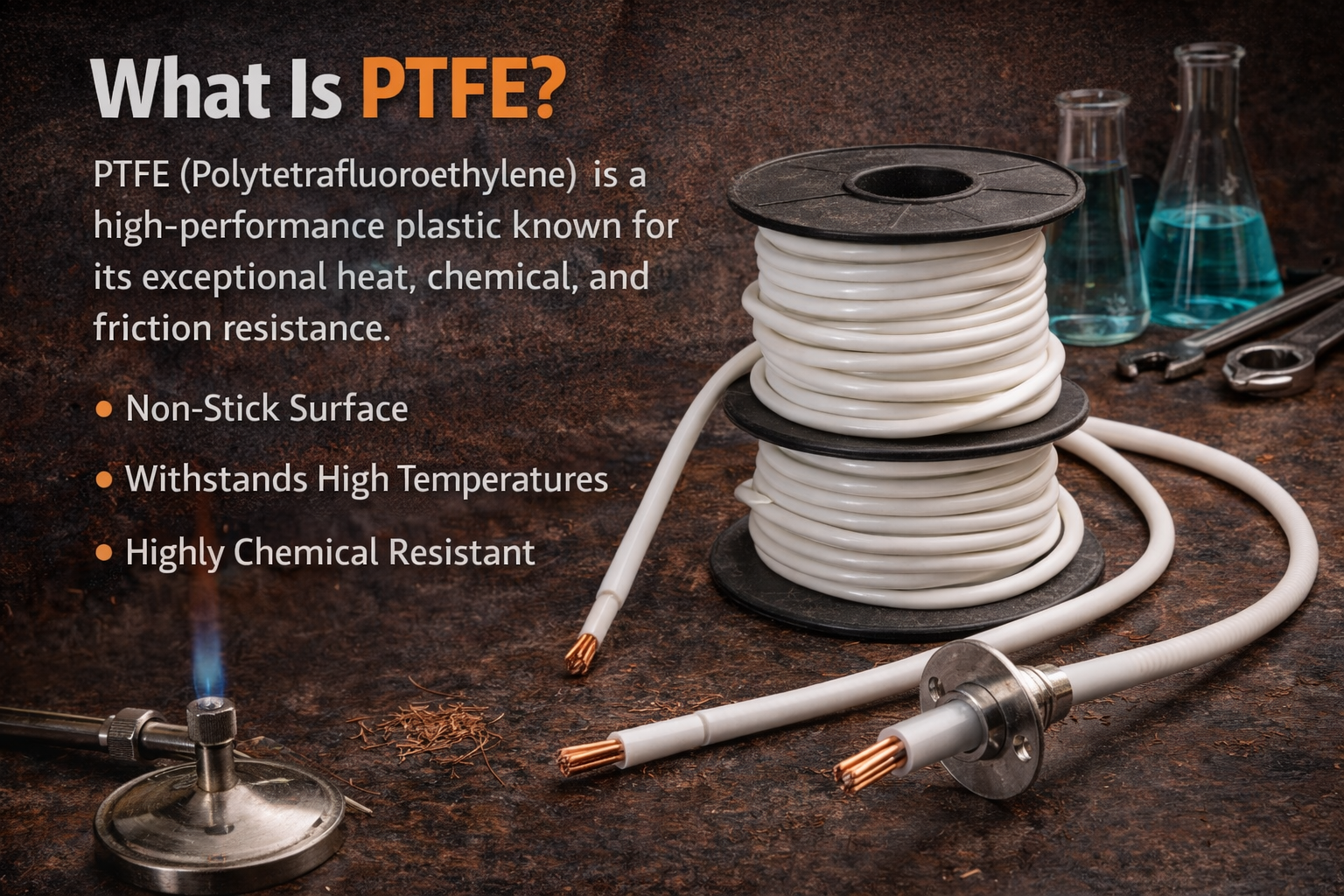
PTFE (Polytetrafluoroethylene), commonly called by the brand name Teflon, is a very high quality and reliable insulation material. It is typically chosen by industrial sectors that require a material with extraordinary temperature and chemical resistance capabilities.
Main Characteristics of PTFE Insulated Cables
- Capable of withstanding high temperatures (up to 260°C)
- Highly resistant to a wide range of chemicals
- Low friction, non-stick surface
- Exceptional dielectric strength
Benefits of PTFE Insulated Cables
Due to its unique features, PTFE is considered quite suitable for use in environments where other materials would cease to perform. It is capable of handling very high temperatures which is partly why it is employed in the aerospace, automotive, and industrial sectors.
Disadvantages of PTFE
- High price when compared with PVC
- Less flexible
- Manufacturing process more complicated
PTFE Cable Uses
- Aeronautics and flight applications
- Healthcare devices
- Industrial installations working at high temperature levels
- Chemical industry
Introduction to Fiberglass Insulated Cables
What is Fiberglass Insulation?
Fiberglass insulation is produced by breaking glasses down into very thin fibers and then significantly interlacing these to form a barrier/protection layer. Other materials such as silicone are often added to make the whole insulation system.
Main Characteristics of Fiberglass Insulated Cables
- Ability to resist temperature of up to 400°C and above
- Fire resistant
- High tensile strength
- Resistant to moisture and chemicals
Benefits of Fiberglass Insulated Cables
These types of cables are made specifically for use under even the roughest of conditions. They present the highest level of resistance to heat and are incidentally the type most frequently used in situations where exposure to high temperatures or even fire is possibly.
Disadvantages of Fiberglass
- Significantly less flexible than PVC
- May occupy more space
- Pricier
Application of Fiberglass Cables
- Closed spaces such as furnaces and kilns
- Metal and glass industries
- Generating stations
- Machinery used in high temperature environments
Major Differences of PVC, PTFE, and Fiberglass
Insulated Cables
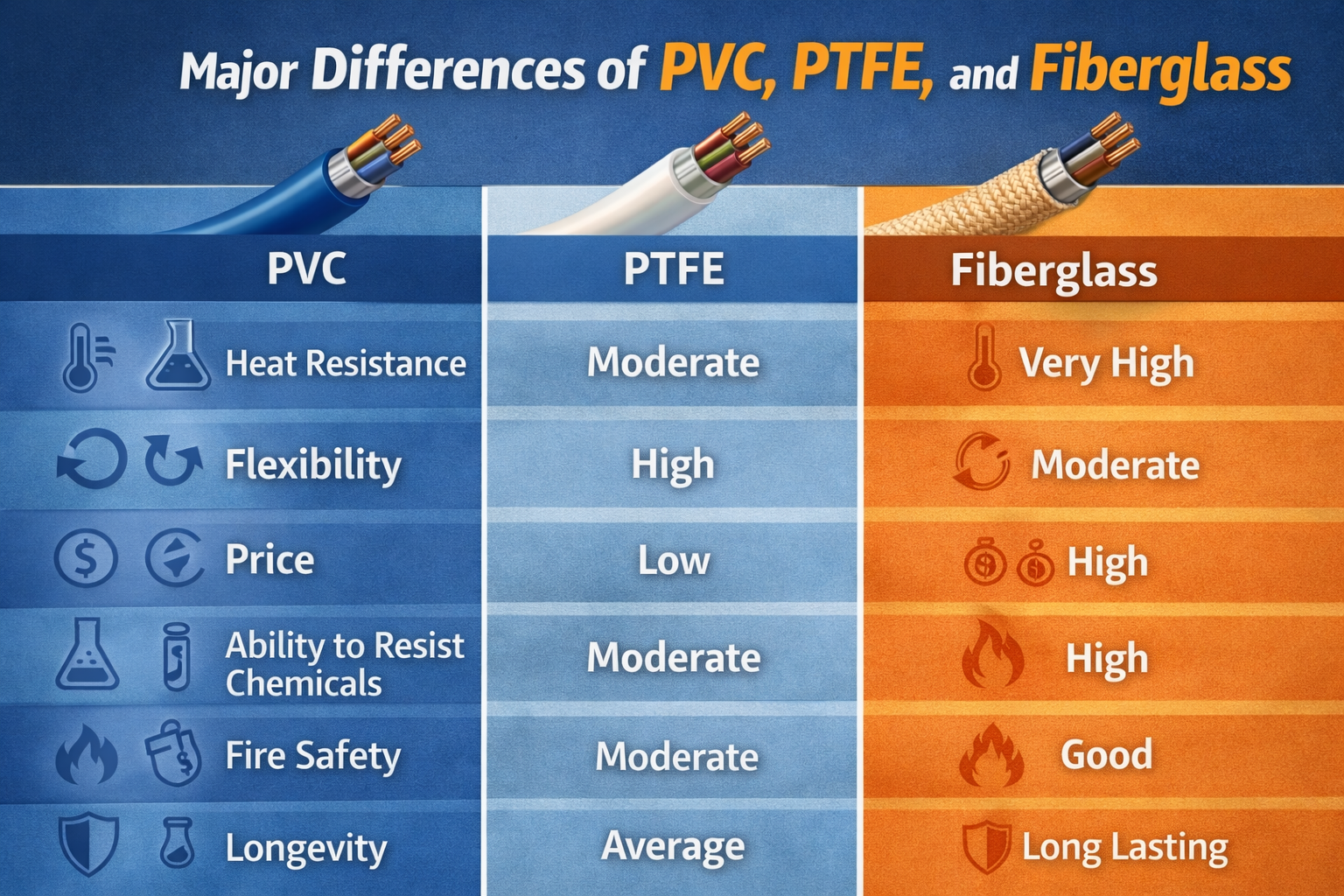
1. Heat Resistance
- PVC: 70°C–90°C
- PTFE: 260°C
- Fiberglass: 400°C+
When it comes to heat tolerance, Fiberglass takes the lead comfortably.
2. Flexibility
- PVC: Offers the best level of flexibility
- PTFE: Intermediate flexibility
- Fiberglass: Least flexible
When it comes to carrying out installation work, PVC is the very first choice due to its flexibility.
3. Price
- PVC: Budget friendly
- PTFE: Upmarket range
- Fiberglass: Priced from moderate to high
If you want to save money go for PVC and if you want more performance choose PTFE and Fiberglass.
4. Ability to Resist Chemicals
- PVC: Fairly resistant
- PTFE: Perfectly resistant
- Fiberglass: Quite resistant
PTFE clearly stands out as a material that can perfectly withstand even the most aggressive chemicals.
5. Fire Safety
- PVC: Produces very harmful smoke when burnt
- PTFE: Fairly fire resistant
- Fiberglass: Powerfully resistant to fire
In terms of fire safety, fiberglass should be considered the ultimate solution – especially in areas where fire is a concern.
6. Longevity
- PVC: Moderate
- PTFE: High
- Fiberglass: Very high
In the harshest of situations, it is fiberglass cables that will be able to withstand the longest endurance.
Function of Aramid Insulation Paper in Cable Manufacturing
Aramid insulation paper is another widely accepted electrical insulation material. It is very suitable for use in cables of electrical equipment with an outstanding performance record due to its remarkable thermal properties and physical strength.
A trustworthy Aramid Insulation Paper Manufacturer supplies materials that improve the quality of cables which are used in transformers, motors, and high voltage equipment.
- Great temperature resistance
- Superior mechanical properties
- Durability
- Highly efficient electrical insulation
This product is mainly used with fiberglass or PTFE where the conditions becomes demanding.
How to Pick Suitable Insulated Cable?
Decision making regarding the cable selection is influenced by quite a few things:
1. Temperature
For applications where heat is very intense, cables made of PTFE or fiberglass will be better options. PVC is good enough when the temperature is normal.
2. Availability of Funds
It is better to use PVC for where minimizing cost is of uttermost importance, otherwise PTFE and fiberglass are advisable where performance is paramount.
3. Conditions
- Exposure to chemicals →PTFE
- High temperature → Fiberglass
- Normal use → PVC
4. Degree of Flexibility
For complex wiring and tight spaces, PVC would be the material of choice.
Why Selecting the Right Manufacturer is Crucial
The insulation materials determine the performance and safety of the cables. Collaborating with a reputable Electrical Insulation Materials Manufacturer guarantees:
- Use of finest raw materials
- Adherence to safety standards
- Performance over a long period
- Personalized solutions to individual requirements
Similarly, when you choose a trusted Aramid Insulation Paper Manufacturer you are making a decision for electrically efficient operations under even the most extreme conditions.
Industrial Uses of These Cables
PVC Cables
- Homes wiring
- Offices infrastructure
- Electrical Systems of low power
PTFE Cables
- Aerospace Systems
- Medical Devices
- Radio Frequency Communication Systems
Fiberglass Cables
- Steel Mills
- Glass Manufacturing
- Industrial Machinery
Future Schemes in Electrical Insulation Materials
With technology improvements, insulation materials get more efficient and environmental friendly. Some of the current trends are:
- Environmentally friendly insulation materials
- High-performance composite insulation
- Strong demand for heat resistant cables
- Smart insulation technologies
Manufacturers concentrate on making materials more durable, reducing environmental impact, and raising safety levels.
Each of the three types of cables with insulation of PVC, PTFE, and fiberglass serve distinct roles in the electrical industry. PVC is a very cost-effective material and with its flexibility makes it perfect for the usual type of applications. PTFE has outstanding chemical and heat resistant properties, while fiberglass continues to lead in terms of performance under extreme conditions.
The choice of insulation material should be dictated by the particular requirements like temperature, environment, and budget. A good partnership with a reliable Electrical Insulation Materials Manufacturer and sourcing from a trusted Aramid Insulation Paper Manufacturer, you can be assured of performance, safety, and reliability over a long time in your electrical systems.
A good understanding of the said facts not only facilitates in making a clear and wise decision but also guarantees that your electrical installations are functioning at their maximum efficiency, being durable and safe.
Related Post:
How to Clean Aluminium Window Frames

